Harness vs. Collar for a Puppy: When to Use Each
Harness vs. collar for a puppy: a harness for walks and pulling, a collar for ID. When to use each, why your puppy needs both, and why to skip choke and prong collars.
Should the leash clip to a harness or a collar? For a puppy, the honest answer is that you want both, used for different jobs. A flat collar carries your dog's ID and is fine for a calm, trained walker. A harness is the better tool for walks while your puppy is still learning, because it keeps pressure off a developing throat and gives you gentle control.
Here's how they compare and when to reach for each.
In this guide
| Collar | Harness | |
|---|---|---|
| Main job | Holding ID tags, everyday wear | Walking, especially a puller |
| Pressure | On the neck/throat | Spread across the chest |
| Good for pullers | No; can strain the throat | Yes, front-clip eases pulling |
| Escape risk | Can slip a loose collar | Harder to back out of |
| Get it | Check price → | Check price → |
What the collar is for
Every puppy should wear a flat collar with an ID tag from day one, even indoors. It's the fastest way a lost dog gets home, and it gives you something to clip a leash to in a pinch. What a collar is not great for is walking a puppy that pulls: all that force lands on the throat. A collar is for identification and for calm, trained walkers, not for muscling a bouncy pup down the block.
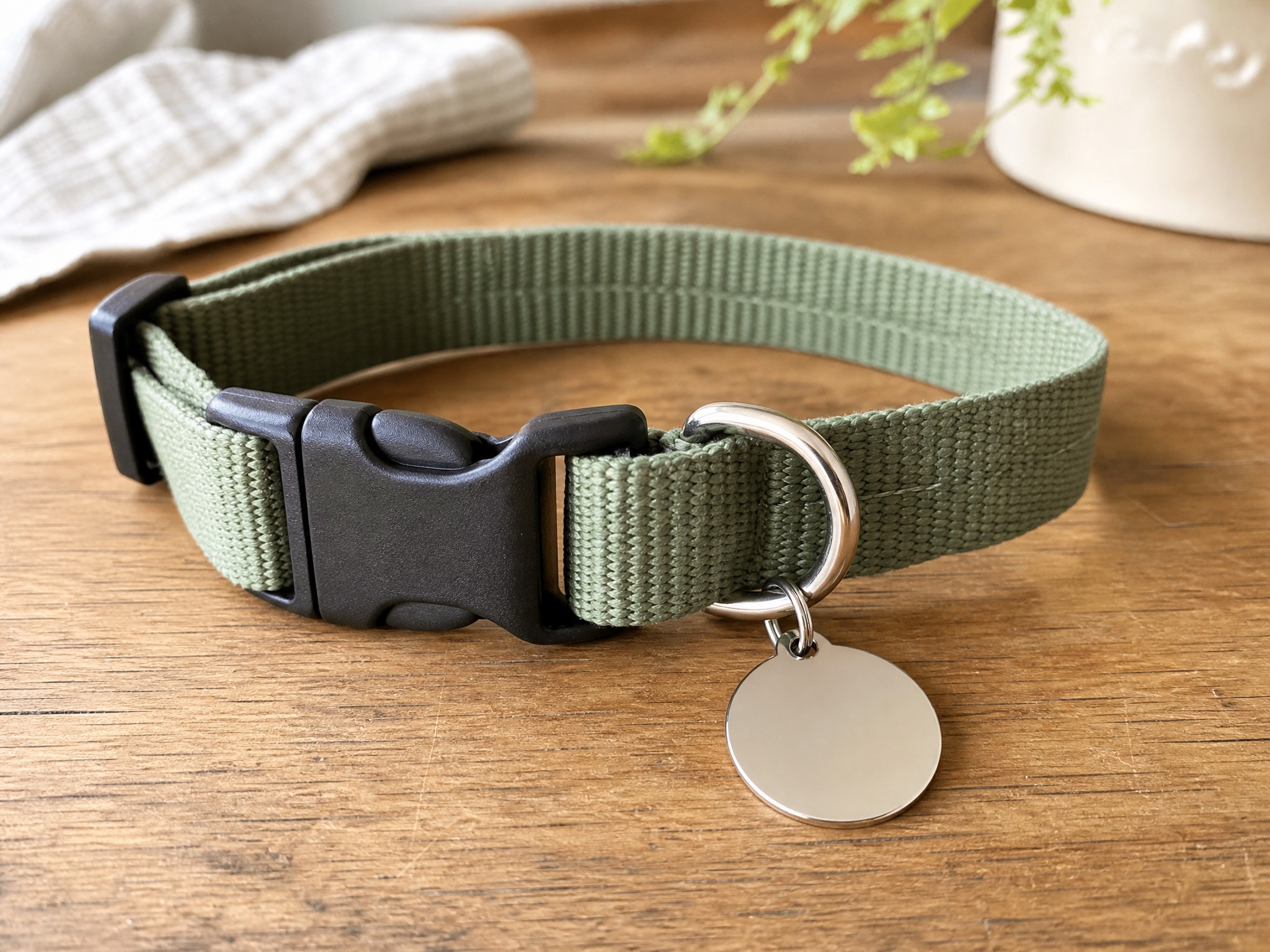
Adjustable Collar & ID Tag
A flat collar with a clear ID tag belongs on your puppy at all times. Adjustable sizing keeps up with a fast-growing neck. Check the fit often using the two-finger rule so it's secure but never tight.
What the harness is for
A harness spreads leash pressure across the chest instead of the neck, which is safer for a puppy and much more comfortable for one that hasn't learned not to pull. A front-clip harness goes a step further: when your puppy lunges, the chest clip turns them gently back toward you, which discourages pulling while you teach loose-leash walking. It's also harder for a wiggly puppy to escape than a collar.
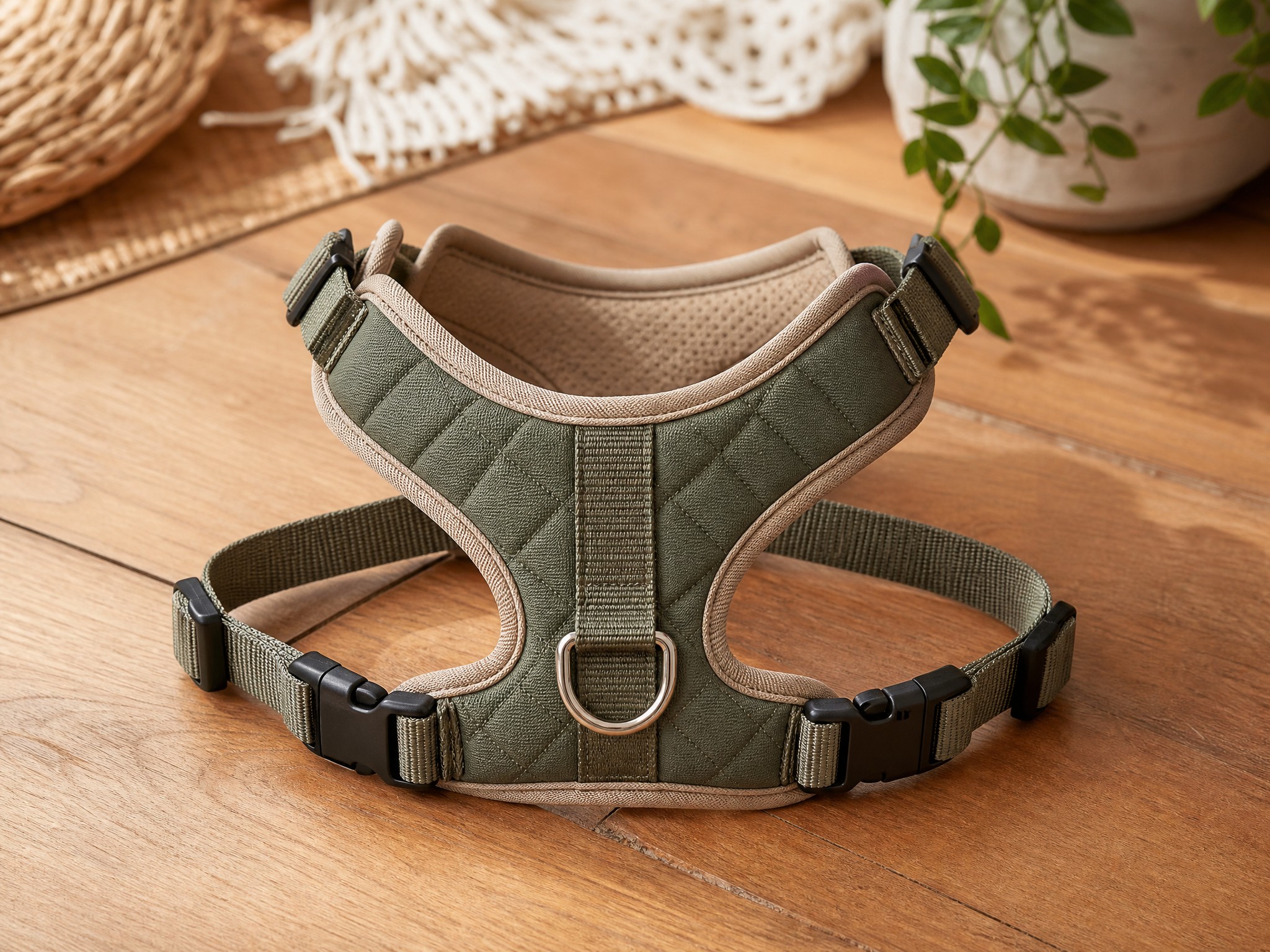
Front-Clip Harness
The chest clip redirects a pulling puppy back toward you and keeps strain off the throat. Choose adjustable straps so it keeps fitting as your pup grows, and recheck the fit every couple of weeks.
As an Amazon Associate this site is designed to earn from qualifying purchases. Product buttons are affiliate links — buying through them may earn us a small commission at no extra cost to you, and never changes what we recommend. Full disclosure.
When to use each
- Collar: all-day wear for ID, and leash duty only for a calm dog that already walks nicely.
- Harness: walks, training, and any puppy that pulls or could slip a collar. Clip the leash here while the manners are still forming.
- Both at once is normal: the collar carries the tags, the leash clips to the harness.
One caution: skip slip, choke, and prong collars on a puppy. They rely on discomfort, and a positive front-clip harness plus the loose-leash method does the job without it.
Fit and safety for both
Whichever you're putting on, the two-finger rule keeps it safe: you should be able to slide two fingers under the collar or any harness strap. A collar that's too loose is a real escape risk, because a startled puppy can back out of it and bolt; one that's too tight is uncomfortable and unsafe. Puppies grow fast, so check both the collar and the harness every couple of weeks and adjust or replace them before they start to dig in.
If your puppy is the kind who slips a regular collar, a properly fitted martingale (a limited-slip collar) tightens just enough to prevent a backout without choking, and many owners find it a safer everyday option than a plain flat collar for an escape artist. Keep the ID tag current with your phone number no matter which you choose. To put the gear to work, see leash training basics, and for the picks, the best harness roundup.
Questions owners ask
Get the free New-Puppy Checklist
Put the whole first month on one page — supplies, setup, and the routine that keeps training on track.
Get the Free Checklist