How to Potty Train a Puppy (Step by Step)
A calm, accident-light potty-training plan: build the schedule, supervise, reward the right spot, and handle setbacks without scolding.
Potty training is the first big test of your patience, and it's also the easiest skill to get right once you understand the simple truth behind it: puppies don't have accidents on purpose. They go when they need to, where they happen to be. Your whole job is to make “outside” the most likely place at the moment they need to go. Do that consistently and most puppies are reliably trained in three to six weeks.
Here's the plan we'd follow from day one.
In this guide
Step 1: Build a potty schedule
Young puppies can only hold their bladder for a few hours. A common rule of thumb is roughly one hour per month of age, plus one — so a two-month-old pup may need a break every two to three hours, and that's during the day, not overnight. Don't treat that as a target to push; take them out more often than you think you need to.
Take your puppy out at every one of these moments:
- First thing in the morning, the second they wake up
- After every meal and big drink of water
- After every nap
- After play or excitement
- Last thing before bed
Go to the same spot each time. Carry or walk them there on a leash rather than letting them wander, so the trip has one clear purpose.
Step 2: Supervise, or confine
The fastest way to slow down potty training is to give a puppy the run of the house before they're ready. When you can't watch your puppy closely, they should be in their crate or a small gated area. A properly sized crate works because puppies avoid soiling where they sleep, so it builds bladder control and buys you time to get them outside.
When they're loose, watch for the tells: sudden sniffing, circling, whining, or drifting toward a door or a past accident spot. The instant you see one, scoop them up and head outside.
Step 3: Reward the right spot, every time
This is the part people skip, and it's the part that works. The moment your puppy finishes going outside, mark it with a happy word (“yes!” or “good potty”) and give a small treat right there, outdoors. Not when you get back inside — right then, where it happened, so the reward connects to the act.
A treat pouch on your belt makes this effortless. For a week or two, going potty outside should be the best-paid job your puppy has. You can fade the treats once the habit is solid.
Step 4: Handle accidents without drama
Accidents are feedback, not crimes. If you catch your puppy mid-act indoors, interrupt with a calm, neutral sound and carry them outside to finish, then reward if they do. If you find a puddle after the fact, simply clean it — there's no value in scolding a puppy for something they did minutes ago, because they won't connect the punishment to the act. All it teaches is to hide from you.
Step 5: Nighttime potty
Expect at least one overnight trip for the first few weeks, especially with very young puppies. Keep the crate close so you can hear them stir. When they wake and cry, take them out quietly: no playing, no lights, no chatter. Potty, praise, and straight back to the crate. Boring nights teach a puppy that 3 a.m. is for sleeping, not socializing. Most pups can hold it through the night by around four to five months.
When it's not working
If accidents are frequent and random after a few weeks of consistency, look at three things first: are you getting them out often enough, are they getting too much unsupervised freedom too soon, and are old accident spots fully cleaned? Tighten those and progress usually returns.
One important exception: frequent accidents, straining, or blood can signal a urinary tract infection or other medical issue, which is common in puppies. If something seems off rather than just untrained, check with your veterinarian.
Gear we mention in this guide
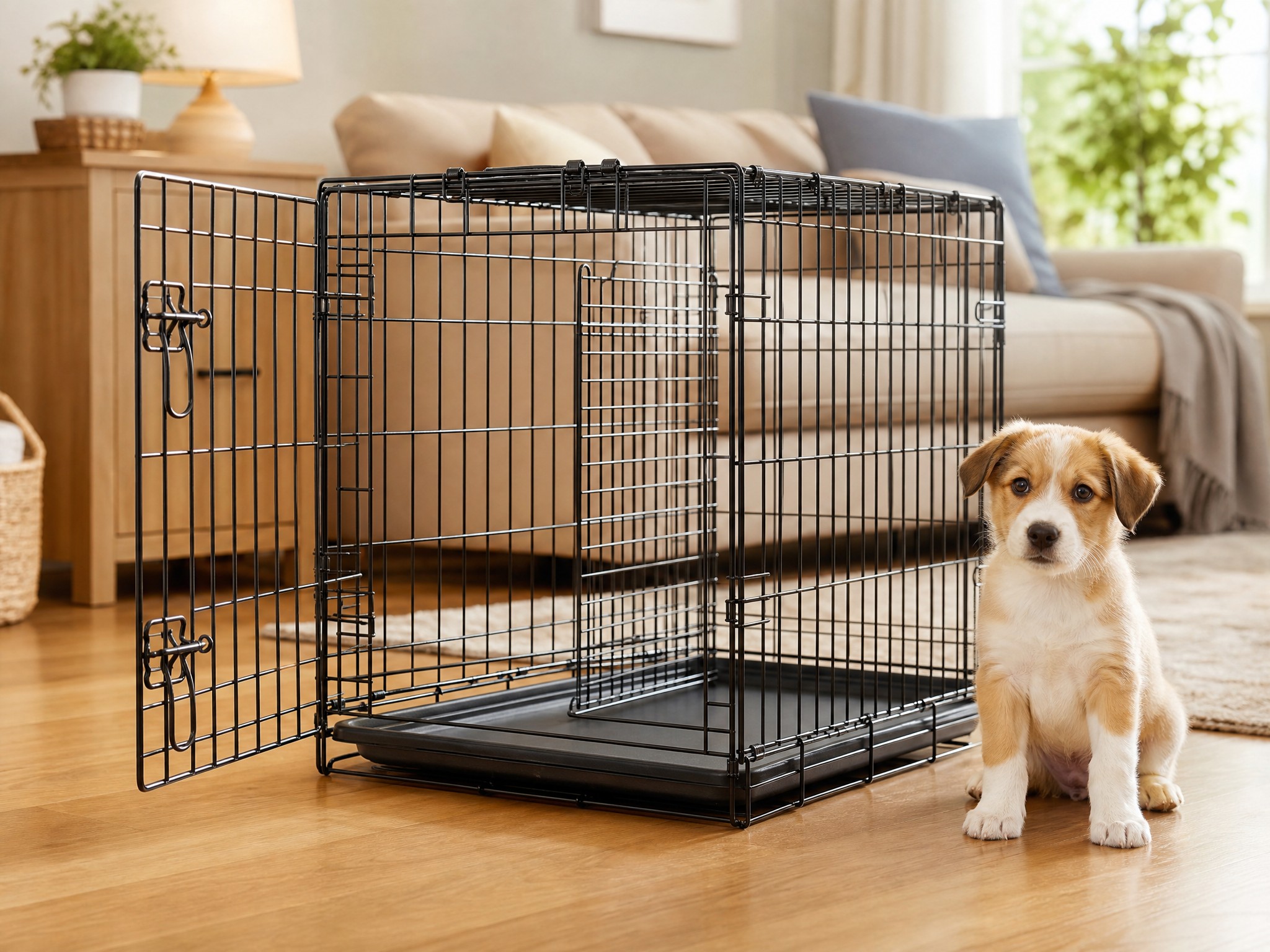
Wire Crate with Divider
A snug, right-sized den discourages soiling and builds bladder control. The divider keeps it puppy-sized now and full-sized later.
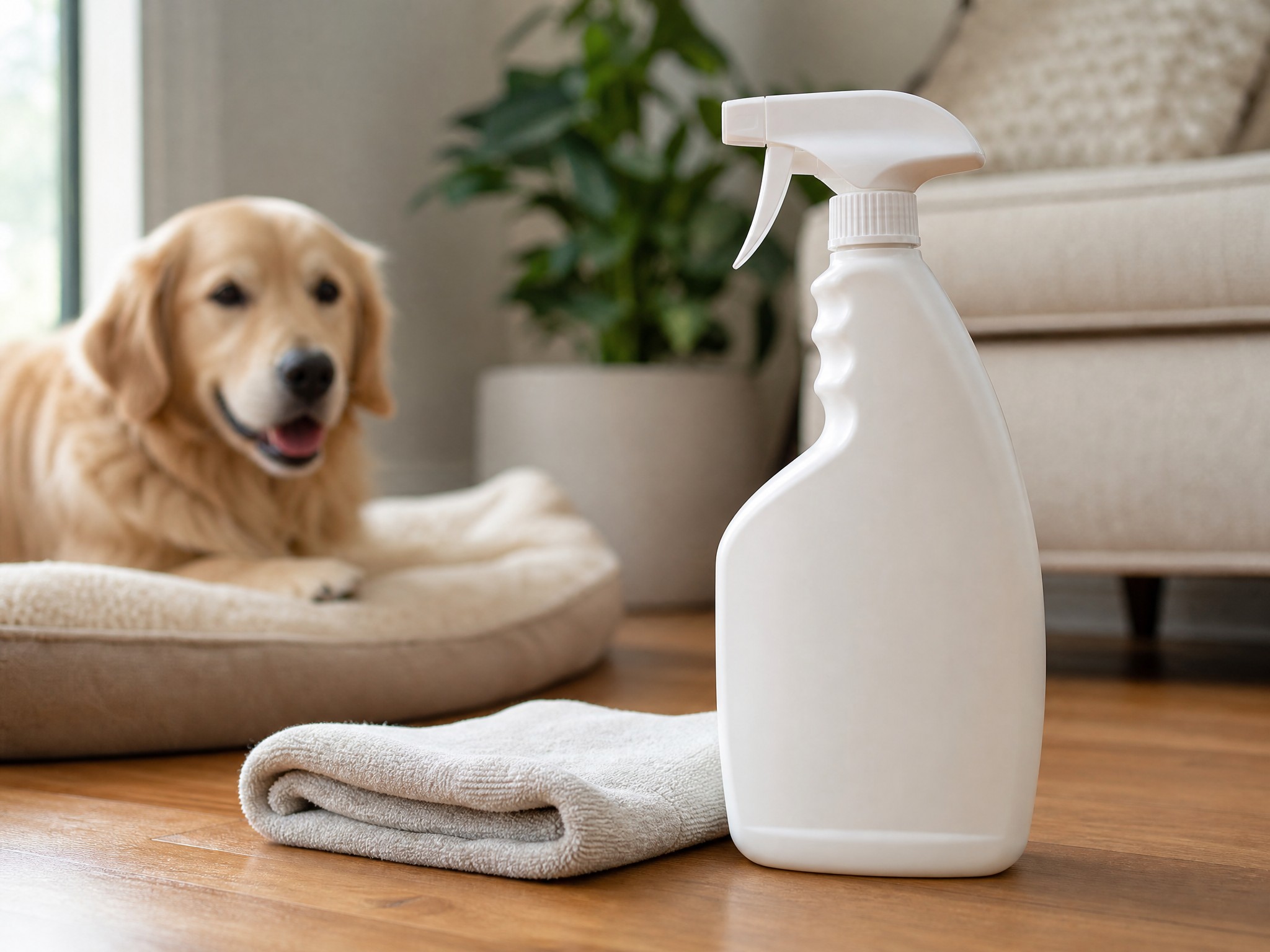
Enzyme Stain & Odor Cleaner
Ordinary cleaners leave a scent a puppy's nose returns to. An enzyme cleaner breaks down accident odor at the source so the same spot doesn't become a habit.
As an Amazon Associate this site is designed to earn from qualifying purchases. Product buttons are affiliate links — buying through them may earn us a small commission at no extra cost to you, and never changes what we recommend. Full disclosure.
Gear that makes potty training easier
A right-sized crate, a treat pouch, and a good enzyme cleaner do most of the heavy lifting.
Questions owners ask
Get the free New-Puppy Checklist
Put the whole first month on one page — supplies, setup, and the routine that keeps training on track.
Get the Free Checklist