Crate vs. Playpen for a Puppy: Which One Do You Actually Need?
Crate vs. playpen for a puppy compared: a crate is for rest and potty training, a pen for daytime space. When to use each, and why most owners use both.
New owners often ask whether they need a crate or a playpen, as if it's an either-or. It usually isn't. A crate and a pen solve different problems, and most households end up using both. The short version: a crate is a small den for rest and sleeping, while a pen is a larger gated zone for supervised daytime hours.
Here's how they compare, when to reach for each, and how they work together.
| Crate | Playpen (exercise pen) | |
|---|---|---|
| Main job | Rest, sleep, potty training | Safe daytime containment |
| Size | Snug den, just enough to turn around | Room to stand, stretch, and play |
| Potty training | Helps (pups avoid soiling the den) | Less so; pup can move away to go |
| Unsupervised use | Short stints and overnight | Short, supervised-ish stretches |
| Price range | $$ Check price → | $$ Check price → |
When the crate wins
The crate is your potty-training engine and your puppy's bedroom. Because puppies instinctively avoid soiling where they sleep, a properly sized crate builds bladder control and gives your pup a calm place to settle. Use it for naps, overnight sleep, and short stretches when you need your hands free and your puppy safe. The key is the right size: just enough room to stand, turn, and lie down, which a crate with a divider lets you dial in as your puppy grows.
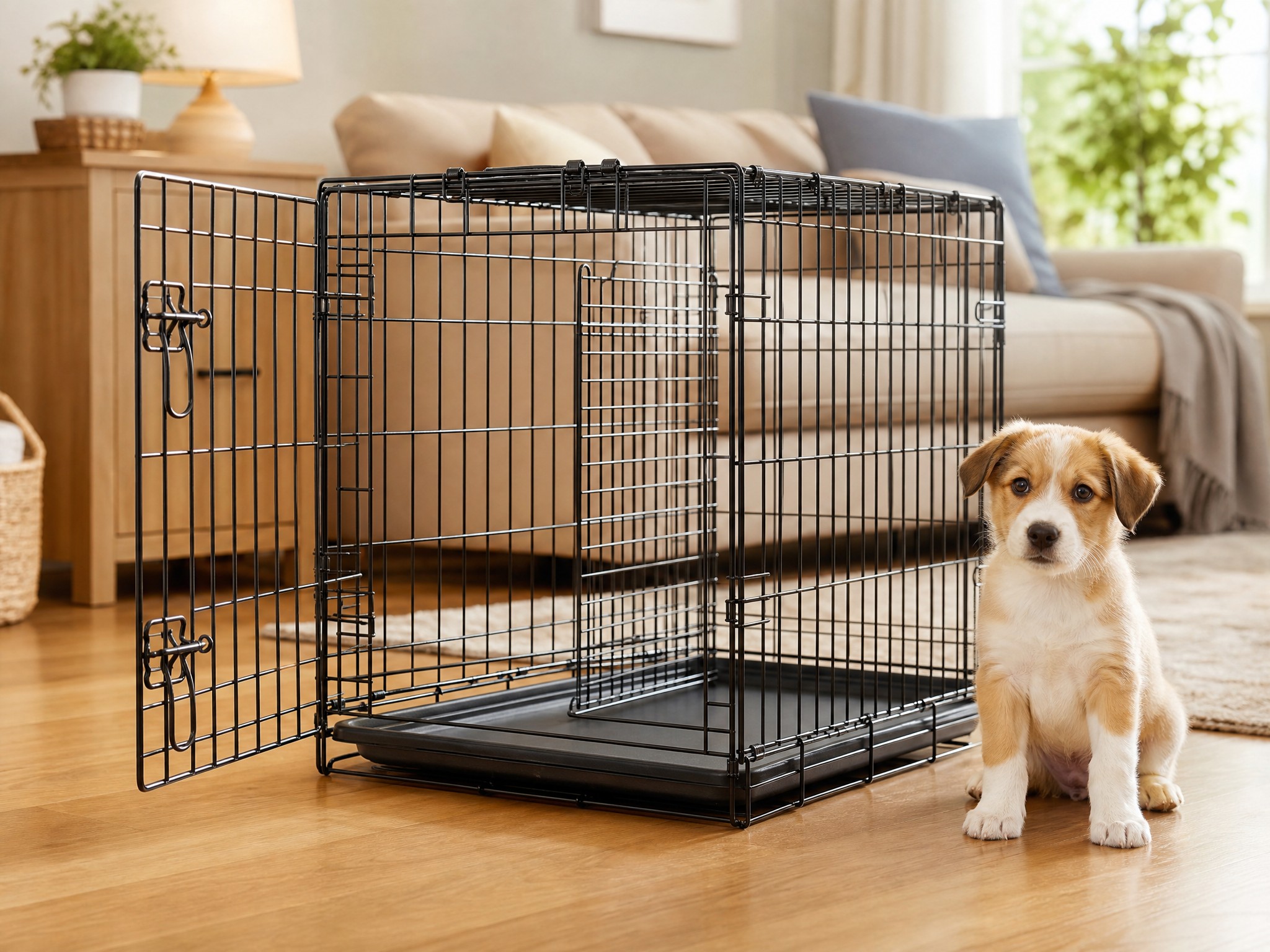
Wire Crate with Divider
The divider keeps the den puppy-snug now and opens to full size later, so one crate lasts. Folds flat, wipes clean, and the open sides help a nervous puppy settle.
When the playpen wins
A pen is for the in-between hours: you're home and supervising loosely, but you can't have eyes on the puppy every second. It gives them room to potty on a pad, play with a chew, and stretch their legs without free run of the house. A pen pairs perfectly with potty training because it contains accidents to one easy-to-clean zone, and it's a gentler introduction to alone time than a closed crate.
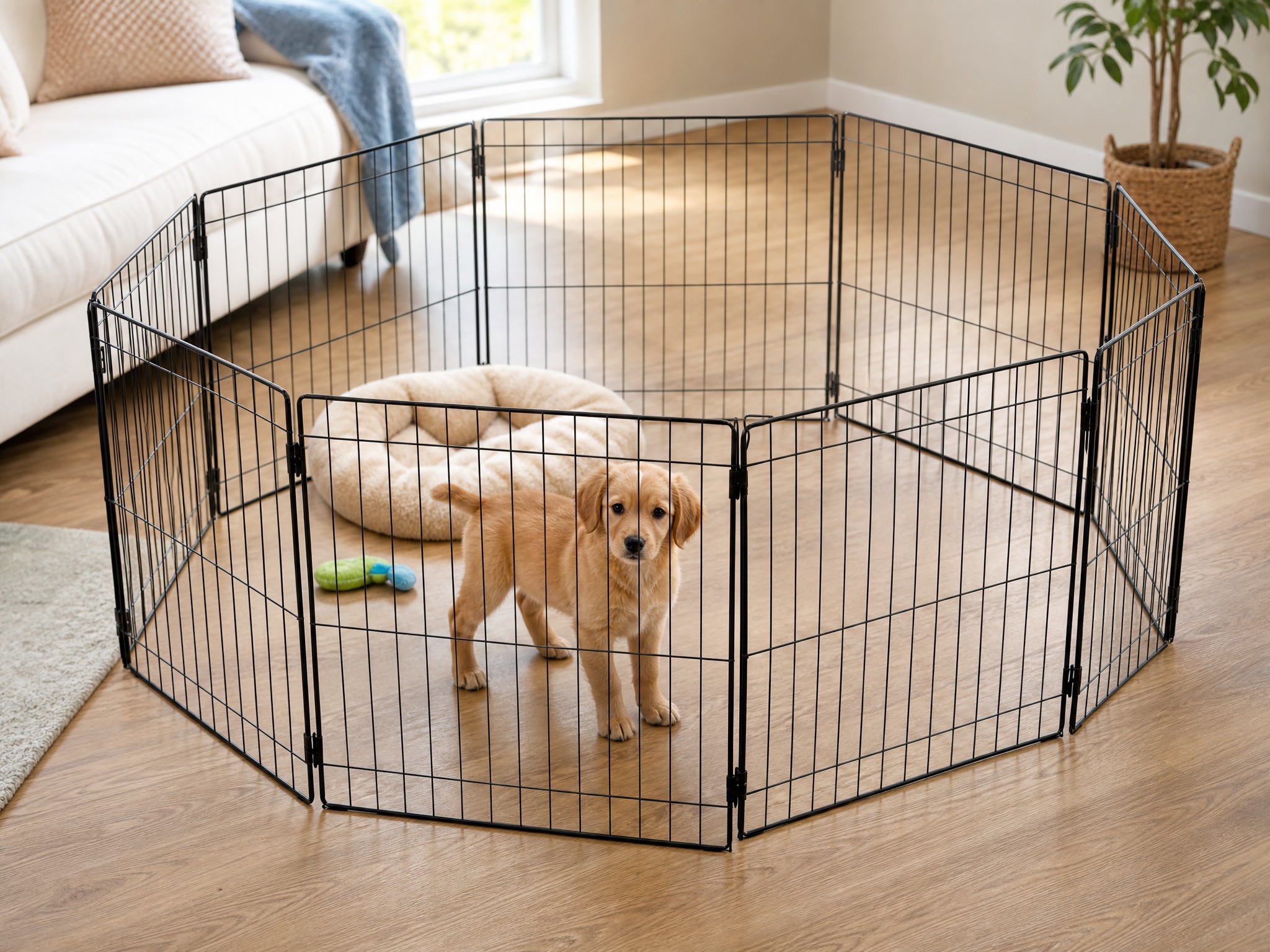
Exercise Pen
A folding pen creates a safe, gated area you can set up anywhere and fold away when you're done. Pair it with the crate, a water bowl, and a toy for a complete daytime setup.
As an Amazon Associate this site is designed to earn from qualifying purchases. Product buttons are affiliate links — buying through them may earn us a small commission at no extra cost to you, and never changes what we recommend. Full disclosure.
Using both together
The setup most owners land on: a crate for sleeping and potty training, placed inside or beside a pen that holds the daytime space. Your puppy naps in the den, plays in the pen, and earns more freedom in the house as their training holds. It's flexible, it scales as they grow, and it keeps a puppy safe whether you're asleep, busy, or out for a short errand.
Budget and placement
If you can only buy one thing first, buy the crate. It does the most for potty training and gives you a safe place to put a sleeping puppy from day one. A pen is the natural second purchase once you've seen where your puppy needs more room during the day. Together they still cost less than the furniture and shoes an unsupervised teething puppy can destroy in a week.
Placement matters as much as the gear. Put the crate somewhere quiet enough for real rest but not so isolated that your puppy feels cut off from the family, and keep it in or near your bedroom for the first week or two so a young puppy settles overnight. Set the pen up in a high-traffic room like the kitchen or living room, where your puppy can be part of things while staying contained. To pick the right crate size and type, read how to choose a puppy crate, then see the full best crates roundup. To make the crate a place your puppy loves, our crate-training guide walks through the introduction.
Questions owners ask
Get the free New-Puppy Checklist
Put the whole first month on one page — supplies, setup, and the routine that keeps training on track.
Get the Free Checklist