Best Dog Crates for Puppies: 4 Picks That Grow With Your Dog
The best dog crates and pens for puppies, what size to buy, and the divider trick that means you only buy one crate. Honest picks with a plain note on why.
A crate is the single most useful thing you can buy before your puppy comes home. It speeds up potty training, gives your pup a quiet den to rest in, and keeps a curious mouth away from your baseboards when you can't watch. The trick is buying the right one once, instead of a too-small crate now and a bigger one in three months.
Below are the four picks we'd set up for a new puppy, plus the size math that saves you from buying twice. Everything here is gear we'd genuinely recommend to a friend, with a plain note on why it earns its spot.
In this guide
| Product | Best for | Price range | |
|---|---|---|---|
| Wire Crate with Divider | Everyday den + potty training | $$ | Check price → |
| Exercise Pen | Daytime, gated free space | $$ | Check price → |
| Crate Mat / Pad | A chew-safe crate floor | $ | Check price → |
| Plush Calming Bed | A cozy rest upgrade | $$ | Check price → |
Our four picks for a new puppy
You don't need a closet full of gear. These four cover rest, containment, and the easy clean-up that keeps potty training on track.
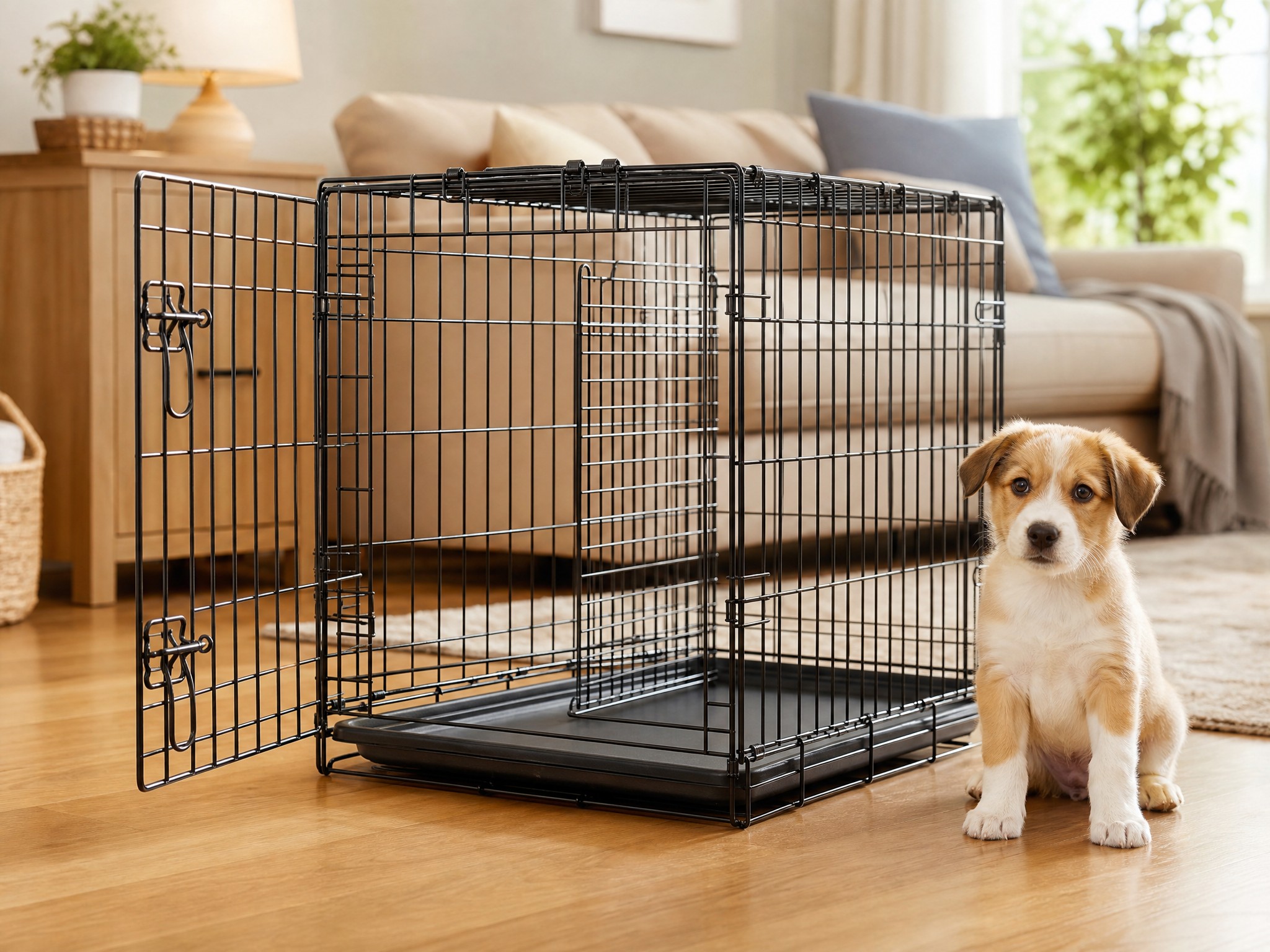
Wire Crate with Divider
A divider panel lets one crate shrink to puppy-size now and open up to full size later, so you buy once instead of twice. Wire folds flat for travel, wipes clean after an accident, and the open sides help an anxious puppy feel less boxed in.
The divider is the part people skip and then regret. Size the crate for your dog's expected adult weight, then move the panel in so the puppy has just enough room to stand, turn around, and lie down. That snug space is what makes the crate work for potty training, because puppies avoid soiling where they sleep.
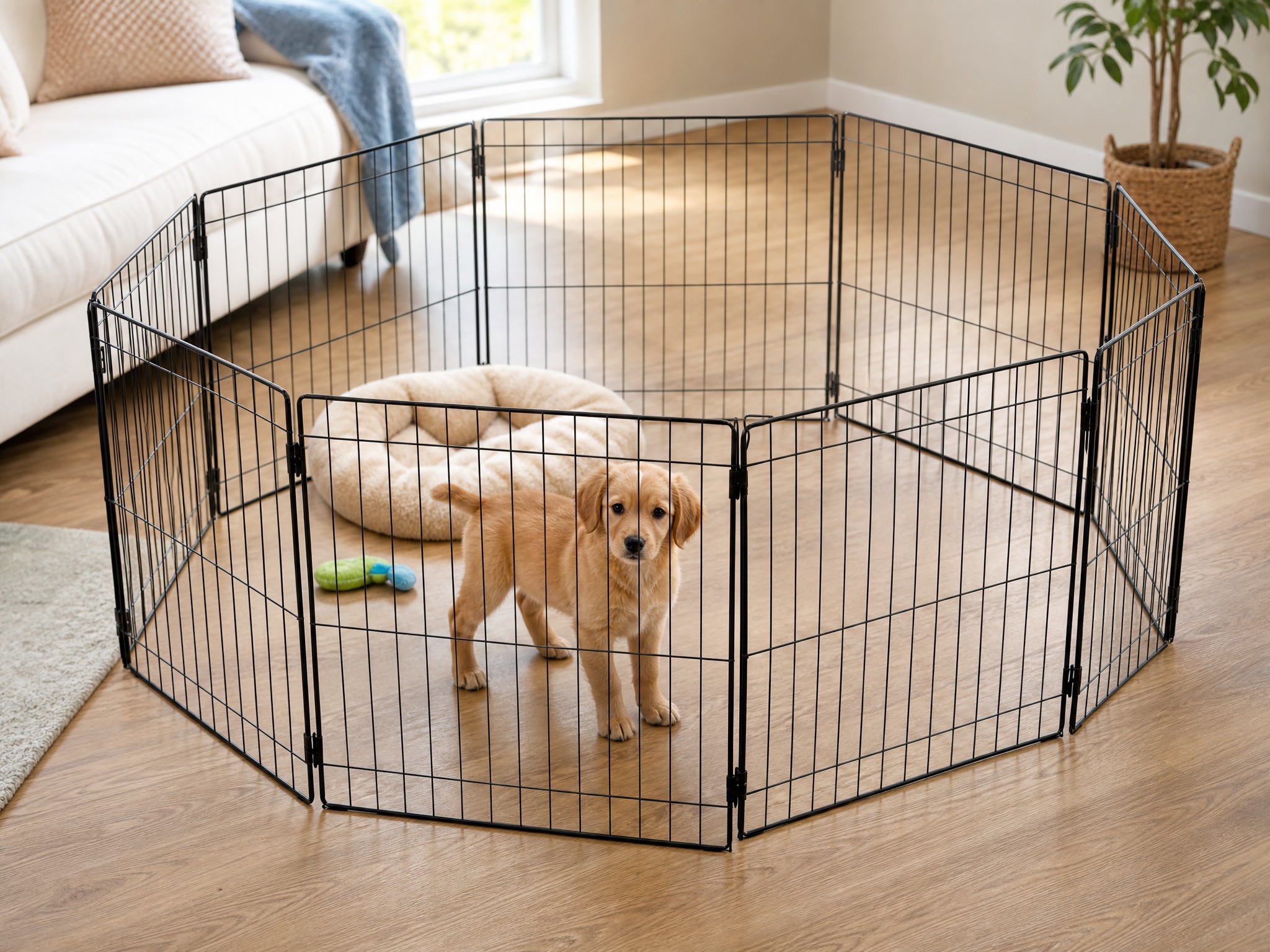
Exercise Pen
A folding pen gives your puppy a safe, gated zone for the hours you're home but busy. Pair it with the crate, a water bowl, and a chew, and you have a place to leave a puppy that isn't ready for the run of the house.
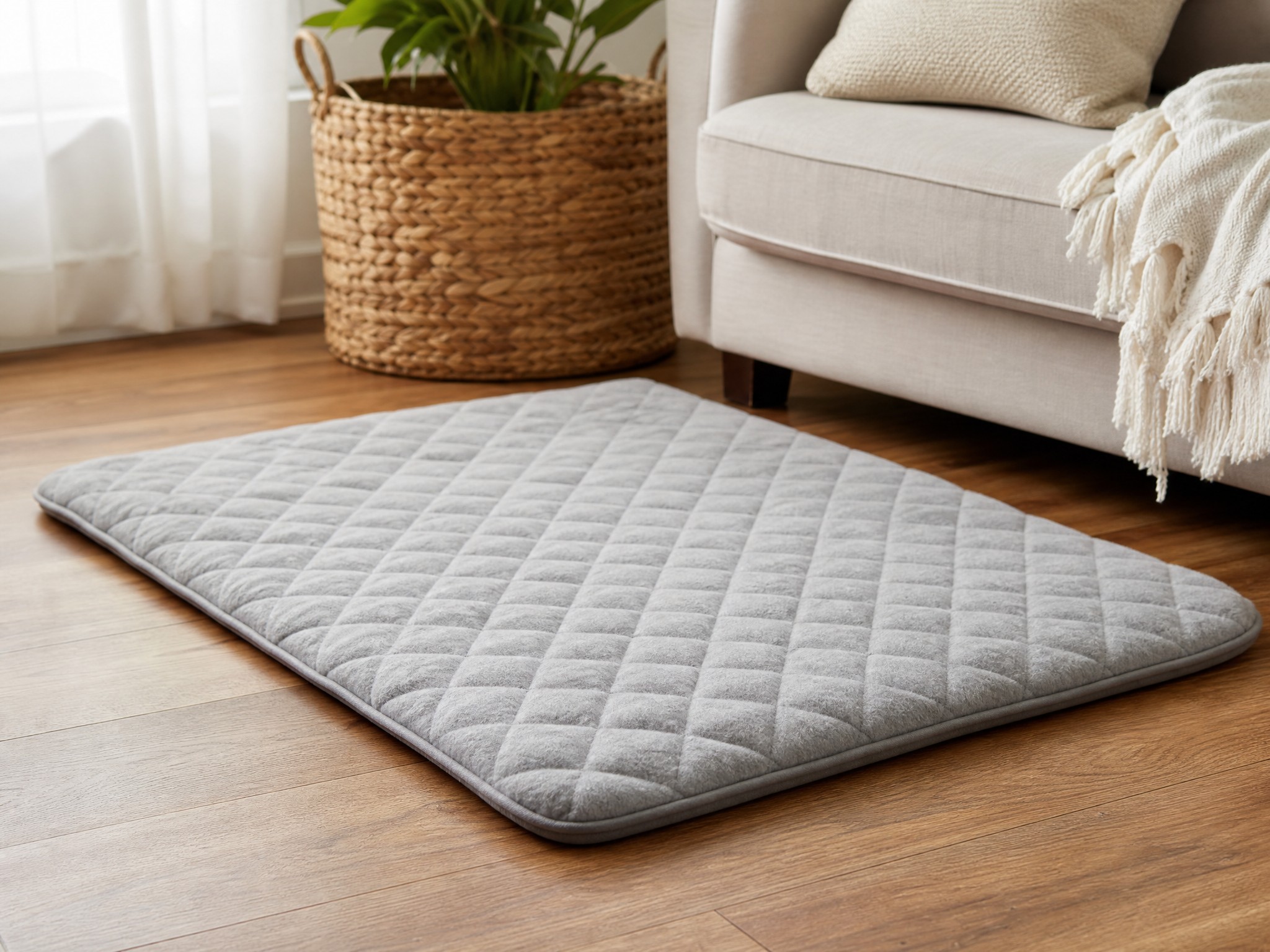
Crate Mat or Pad
A low-profile, chew-resistant pad makes the crate inviting without handing a teething puppy something to shred. Skip thick, fluffy bedding at first; a flat, washable pad is easier to clean and harder to destroy.
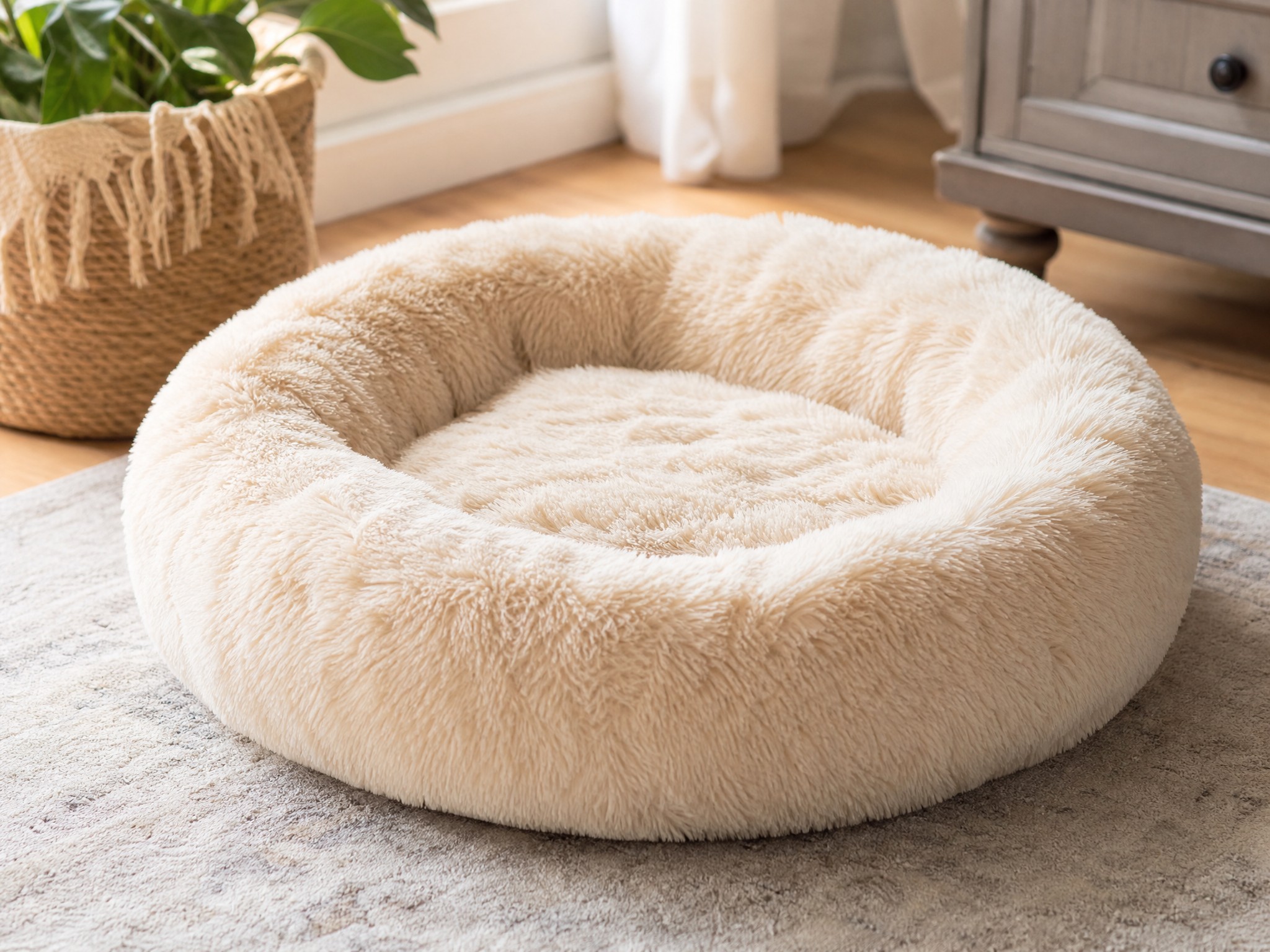
Plush Calming Bed
Once your puppy is past the worst of the chewing months, a soft bed with raised edges gives them something to curl against. Choose a machine-washable cover, because you will wash it more than you expect.
As an Amazon Associate this site is designed to earn from qualifying purchases. Product buttons are affiliate links — buying through them may earn us a small commission at no extra cost to you, and never changes what we recommend. Full disclosure.
What size crate to buy
Get the crate sized for your dog's grown-up weight, not the squishy puppy in front of you. A rough guide:
- Small breeds (up to ~25 lb adult): a 24 to 30 inch crate.
- Medium breeds (~25 to 60 lb): a 36 inch crate.
- Large breeds (~60 to 90 lb): a 42 inch crate.
- Giant breeds (90 lb and up): a 48 inch crate.
Then use the divider to keep the usable space small while your puppy is little, and slide it back as they grow. Not sure of the adult size? Ask your breeder or shelter, or check the average for the breed. For the full walkthrough, read how to choose a puppy crate.
Ready to set the den up properly? Our crate-training guide covers introducing the crate so your puppy chooses to rest there instead of fighting it. And if you're weighing a pen against a crate, the crate vs. playpen comparison lays out when you need each.
Shop the full category
See every crate, pen, and bed pick in one place, organized by what it's for.
Questions owners ask
Get the free New-Puppy Checklist
Put the whole first month on one page — supplies, setup, and the routine that keeps training on track.
Get the Free Checklist