How to Choose Puppy Food: A Plain-English Label Guide
How to choose puppy food by reading the label: look for an AAFCO growth statement, match the formula to your dog's size, read the ingredients, and switch slowly. Consult your vet.
The dog-food aisle is built to confuse you. "Premium," "holistic," and "natural" mean little on their own, and the prettiest bag isn't always the best food. The good news: once you know which four things to check on the label, choosing a solid puppy food takes about a minute.
This is a plain-English label guide. Diet is worth confirming with your vet, especially for large breeds, so treat this as your starting framework.
In this guide
| Check | What to look for | Why it matters |
|---|---|---|
| AAFCO statement | "complete and balanced for growth" | Confirms full puppy nutrition |
| Life stage | Puppy or all life stages | Adult food underfeeds a growing pup |
| Breed size | Large-breed formula if 50 lb+ | Controls calcium for joint health |
| First ingredients | A named protein (chicken, lamb) | Clearer quality than vague "meat" |
1. Look for "complete and balanced" for growth
This is the most important line on the bag, and most shoppers walk right past it. In the United States it's the AAFCO nutritional adequacy statement, and you want one that says the food is complete and balanced for growth or for all life stages. That single phrase tells you the food is formulated to meet every nutritional need of a growing puppy, not just to taste good. A food labeled for adult maintenance will shortchange a puppy.
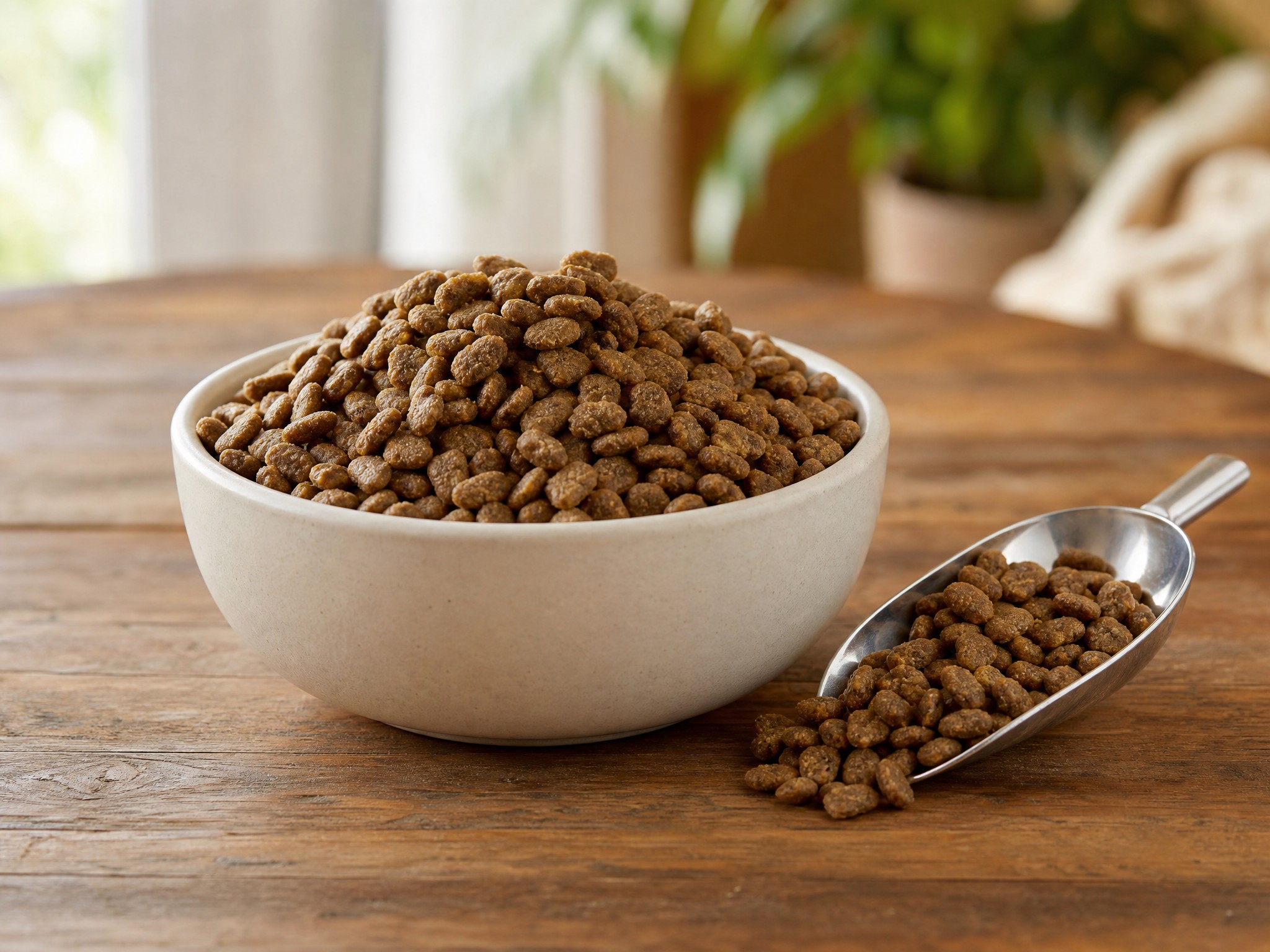
Complete Puppy Food
Pick a food with an AAFCO growth statement and a named protein near the top. You don't need the most expensive bag, just a clearly formulated one your puppy digests well and holds a healthy weight on.
As an Amazon Associate this site is designed to earn from qualifying purchases. Product buttons are affiliate links — buying through them may earn us a small commission at no extra cost to you, and never changes what we recommend. Full disclosure.
2. Match the formula to your dog's size
This is the rule large-breed owners can't skip. If your puppy will mature past about 50 pounds, choose a large-breed puppy formula. These control calcium and calorie density so big puppies grow at a slower, steadier pace, which protects developing joints. Feeding a rich, calorie-dense food to a large-breed puppy can push growth too fast and cause real orthopedic problems. Small and medium breeds have more leeway, but should still eat a puppy formula sized to them.
3. Read the first few ingredients
Ingredients are listed by weight, so the first few tell you the most. A named protein source, "chicken" or "lamb" rather than a vague "meat by-product," is a good sign. Beyond that, don't over-think buzzwords. "Grain-free" isn't inherently better and has drawn veterinary concern; unless your vet has diagnosed an allergy, a quality food with grains is fine. Focus on a clear formula your puppy does well on over marketing language on the front.
4. Switch foods over about a week
Once you've picked a food, change to it gradually. Mix a little of the new food into the old, then shift the ratio a bit each day across roughly seven days. A slow transition avoids the loose stools that come from a sudden switch. Then watch your puppy: good energy, a healthy weight with a visible waist, and firm stools mean the food is working.
Common marketing traps to ignore
Most of the front-of-bag language is there to sell, not to inform. Words like "premium," "holistic," "human-grade," and "natural" have little or no regulated meaning for dog food, so they tell you almost nothing about quality. A picture of fresh vegetables doesn't mean the food is built around them, and a higher price doesn't guarantee a better formula. Flip the bag over and judge the food by the AAFCO statement, the life stage, and the actual ingredients instead of the artwork on the front.
One more thing that quietly unbalances a good diet: treats. Keep treats and table scraps to roughly ten percent of daily calories, because a carefully chosen food does your puppy little good if half their intake is biscuits. For how much and how often to feed, see the feeding guide. For specific picks, the best puppy food roundup, and if you're weighing fresh food, kibble vs. fresh.
Questions owners ask
Get the free New-Puppy Checklist
Put the whole first month on one page — supplies, setup, and the routine that keeps training on track.
Get the Free Checklist